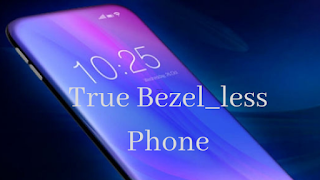
We've all seen the new trend of bezel less phones, only, with notches that many people hate and are wishing for a completely bezel less phone with no notch. Well, Samsung might have just answered your prayers with their notch less bezel less phone. Samsung recently did a presentation, and in that presentation, they talked about UPS (Under Panel Sensor). This means that all the sensors that you usually find on the top bezel or notch of your phone, (i.e. camera, light sensor, e.t.c.) will be imbedded in the screen. They also talked about on display fingerprint sensor. This tech isn't necessarily a new trend, but what's different is that Samsung will be using ultrasonic technology for the fingerprint sensor, which means it will be more secure. Next, they talked about SOD (Sound on Display). This means that there won't have to be a cut_out hole for the sound to come out from. They talked about HOD (Haptic on Display), for gami...
Elon Musk's Tesla has produced some amazing cars, especially when you look at the Tesla models but, he isn't stopping there and has set out for another model, the model Y. During the company's earnings call this week, Elon said that he had approved a prototype crossover E.V. to enter full scale production. It is unlikely that we will see the model Y in 2019 but, this also means that the lunch date won't get past 2020. Unfortunately, we don't know much about the model Y. Although, we have seen some few teasers and Musk once joked that it might not have a steering wheel but beyond that, we know nothing. To get more tech news and updates like this one, subscribe to Worldtechnocrat.
Samsung has released its watch, apple has released its watch and Lg isn't keeping quite either. They are bringing out their own "w7 watch". Check out the video below by "Engadget" for more information! Please leave a comment for me to know what you think and subscribe to get more from "Worldtechnocrat"!


Comments
Post a Comment